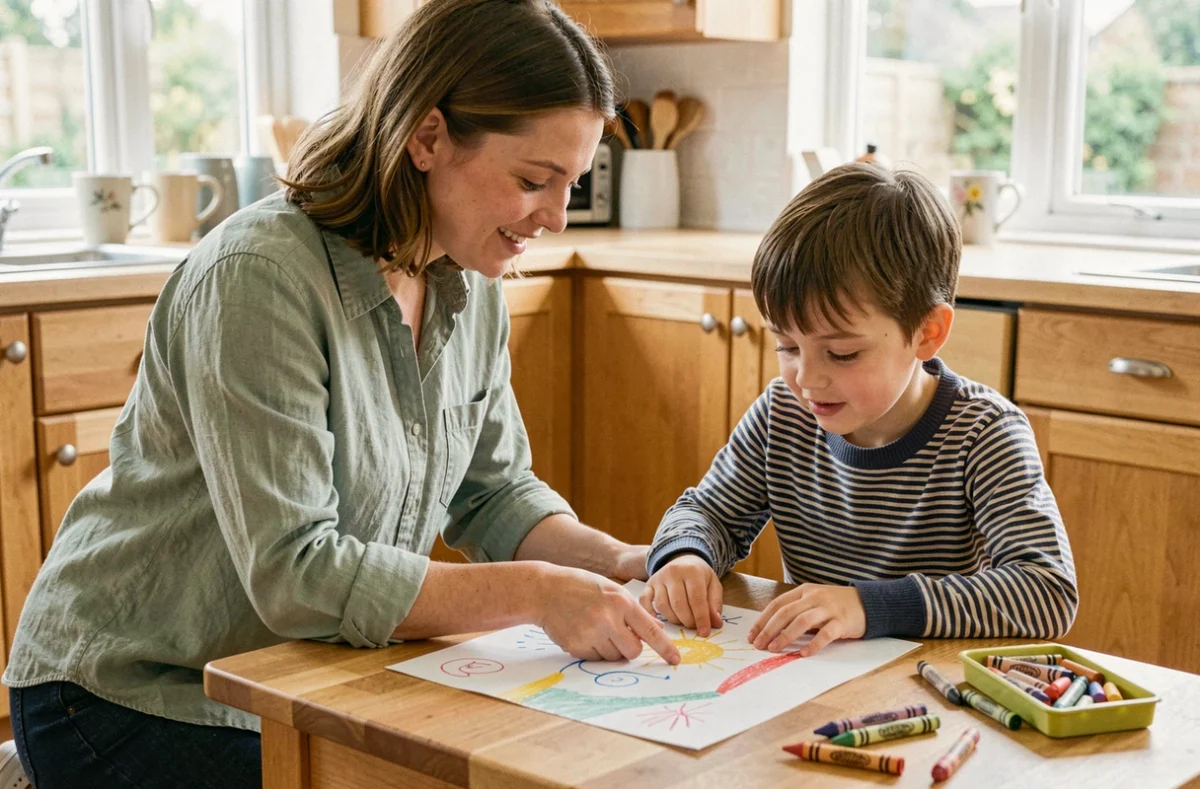
Your child spills their glass, refuses to put on their shoes, then asks for a hug thirty seconds later. These micro-scenes repeat every day and gradually shape their understanding of the world. Supporting a child daily is not just about managing crises: it’s about establishing stable reference points in a flow of ongoing learning.
Children’s Sedentary Lifestyle: A Health Issue Distinct from Sports
Have you ever noticed how much time your child spends sitting in a day? Between school, car rides, and screens at home, the time spent immobile adds up quickly.
Public Health France now distinguishes physical activity and the fight against sedentary behavior as two complementary axes. Playing sports on Wednesday afternoons does not compensate for six hours of sitting the rest of the time. We need to act on both fronts.
In practical terms, this involves simple gestures. Suggesting your child walk to school when the distance allows. Setting a timer to break up screen time. Planning active breaks between homework: some stretches, a trip to the garden, tidying their room while standing rather than slumped on the bed. Reducing sitting time is just as important as moving more.
Find more child-related information on Maman du Net to delve deeper into these topics related to development and daily life with a child.

Family Routines and Learning: What Really Works
A child learns better when they know what comes next. Bath time, mealtime, bedtime story: this predictable sequence provides a reassuring framework. Without a framework, the child constantly tests boundaries, not out of provocation, but because they are seeking reference points.
Flexible Routines, Not Rigid Ones
The nuance lies here. A routine that is too strict generates stress when it is broken (an unexpected event, a delay). An effective routine establishes an order, not a clock. Dinner comes after bath time, regardless of whether it’s at 7 PM or 7:30 PM.
Some useful reference points to structure the day:
- Associate each key moment with a task the child can do alone (hanging their coat on a low hook, putting their plate in the sink, choosing their story).
- Use visual aids for younger children: pictograms stuck to the wall remind them of the sequence without you needing to repeat it.
- Plan a transition time between two activities, even if brief, rather than a sudden switch from playtime to concentration time.
School learning continues at home without necessarily resembling school. Reading a recipe together, counting utensils, naming colors at the supermarket: these ordinary situations anchor skills in reading, math, and vocabulary.
Parent-Child Communication: Using Words Instead of Prohibitions
Telling a three-year-old “don’t run” rarely produces the expected effect. Their brain processes the verb “run” before integrating the negation. Rephrasing it as “walk slowly” gives them a positive instruction they can apply directly.
This mechanism extends to many situations. “Clean your room” remains vague for a five-year-old. “Put the books on the shelf, then the toys in the bin” breaks the task into clear steps. The child understands what is expected, and they can measure their own progress.
Naming Emotions Without Judging Them
When a child cries because their block tower has collapsed, the temptation is to minimize: “it’s nothing.” For them, it is something. Saying “you are frustrated because your tower fell” validates their feelings and teaches them to put a word to what they are experiencing.
A child who can name their emotions manages their reactions better</strong over time. This work on emotional vocabulary starts early and builds through repetition, not through a single conversation.
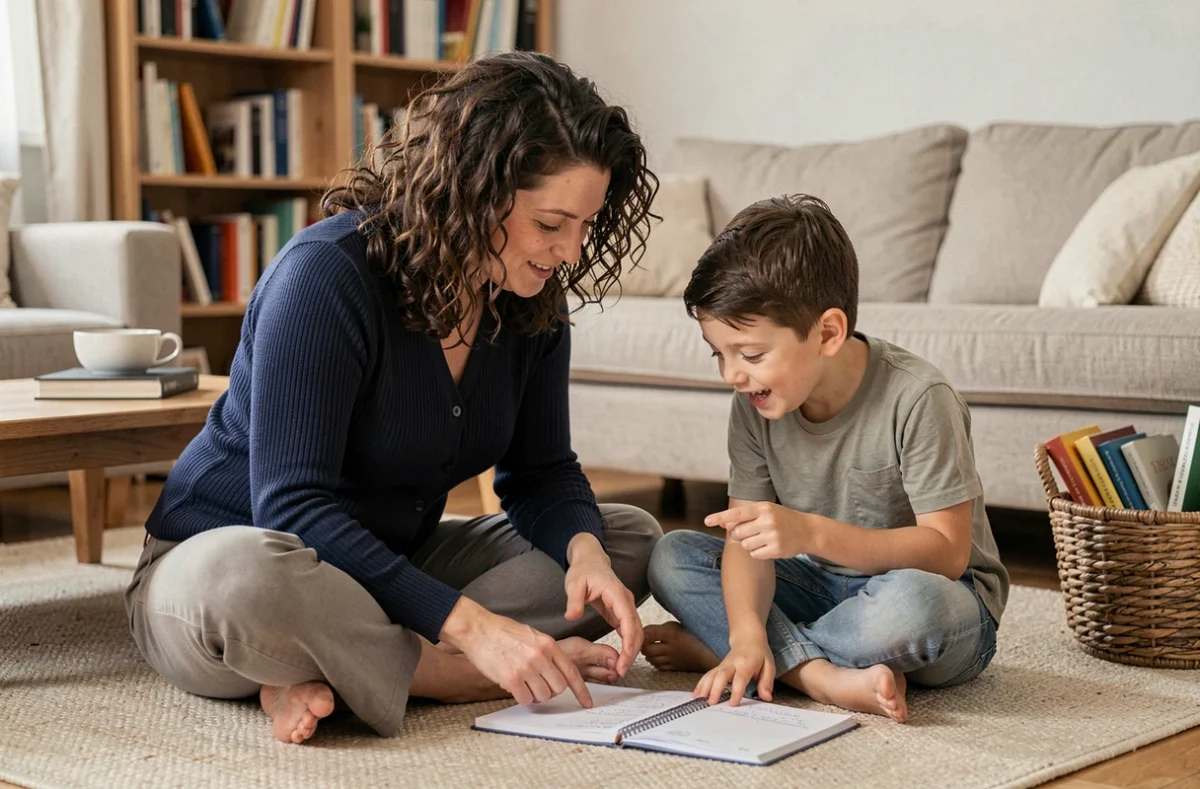
Daily Health Prevention: The Prevention Assessment as a Support Point
The “My Prevention Assessment” program, led by Public Health France, allows you to discuss several topics in one consultation with a healthcare professional: physical activity, vaccination, sleep, nutrition, mental health.
For a parent, this type of appointment offers a structured framework. Rather than gathering scattered information online, you receive recommendations tailored to your child’s age and profile.
Sleep and Nutrition: Two Often Overlooked Pillars
Sleep conditions learning ability, emotional regulation, and growth. A child who sleeps poorly retains less of what they learned during the day and reacts more intensely to frustrations.
On the nutrition side, the regularity of meals matters as much as their content. Eating at fixed times stabilizes energy levels and reduces cravings that trigger irritability and loss of concentration. Varying foods remains a goal, but without turning it into a power struggle at the table.
- Offer a new food alongside a food they already enjoy, without the obligation to taste it.
- Involve the child in meal preparation to spark their curiosity.
- Avoid screens during meals: they distract from hunger and fullness signals.
Supporting a child daily relies on a few stable principles: predictable reference points, action-oriented communication, attention to the body as much as to the mind. The most effective gestures are often the most discreet, repeated day after day without spectacular effects, but with lasting results.