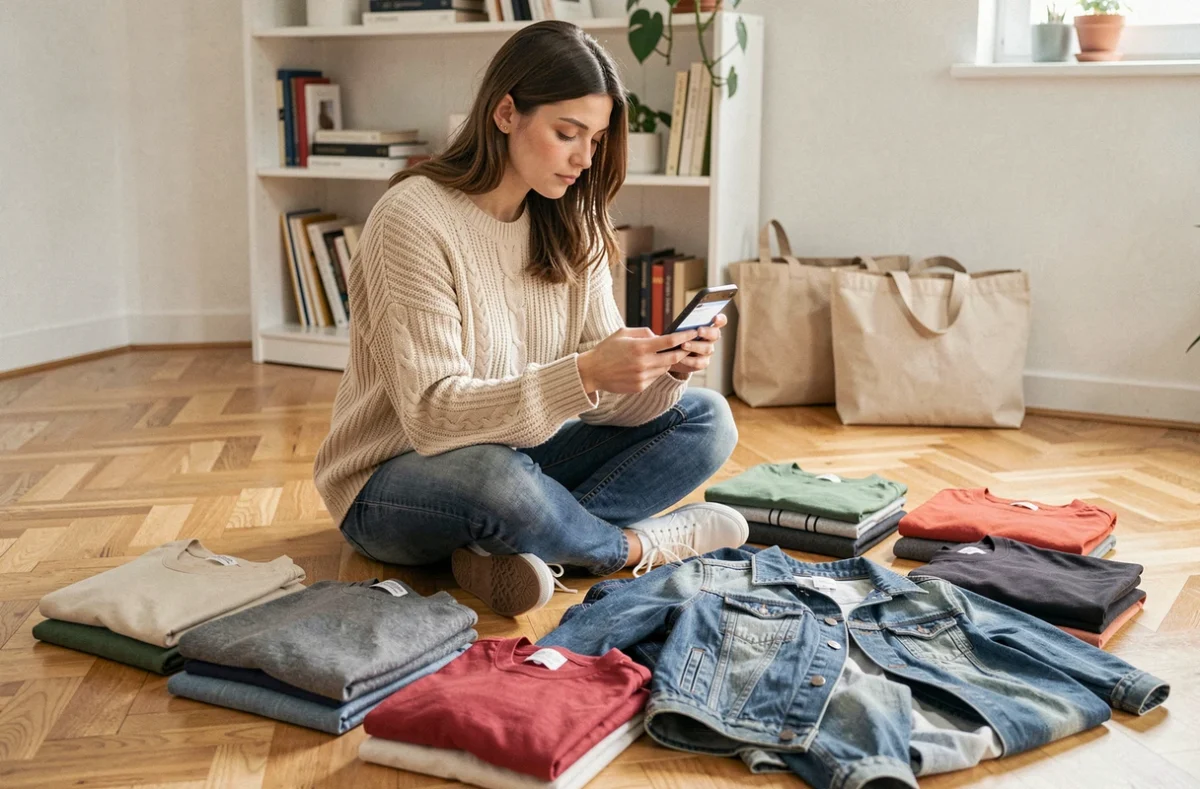
Buying from an online thrift store rarely costs only the price shown in the listing. Shipping fees, platform commissions and the cost of a possible return can make the true cost of a second-hand garment higher than that of a new item on sale. And your options if something goes wrong differ depending on whether the seller is a private individual or a business. Understanding these differences helps you tell a genuine bargain from a bad deal.
The true cost of buying from an online thrift store: visible and hidden fees
The listed price of a second-hand item reflects only part of the total cost. Three expenses routinely add to the bill, with amounts that vary from one platform to another.
| Cost | Private seller (C2C marketplace) | Business seller (professional thrift store) |
|---|---|---|
| Platform commission | Often charged to the buyer (buyer protection) | Generally included in the listed price |
| Shipping fees | Variable, sometimes negotiable | Flat rate or free above a certain spend |
| Return fees | Usually paid by the buyer | Covered if the business offers a right of withdrawal |
| Time limit for filing a claim | Short, subject to the platform’s terms | At least 14 days to withdraw (consumer law) |
| Legal guarantee | None for private sales | Legal guarantee of conformity applies |
The table highlights a point that is often overlooked: returns between private individuals are almost always at the buyer’s expense. For a low-priced item, return shipping can amount to half of what you spent. Platforms that offer buyer protection charge a commission for this coverage, which automatically increases the total cost.
Before checking out, add up the listed price, any commission, shipping fees and the potential cost of a return to get a more accurate picture. A guide such as the one from My French Touch en ligne explains how these fees work on each type of platform.

Scams on second-hand sites: clear warning signs
Spotting a scam on an online thrift store takes less intuition than a few quick checks. Fake online stores are on the rise, and social media provides a storefront for pop-up shops that are difficult to trace.
What the seller profile can tell you
Since February 17, 2024, the Digital Services Act (DSA) has required marketplaces to verify the identity of business sellers and inform buyers when an illegal product has been sold. A business seller must display a SIRET number or its European equivalent. If this is missing from a platform that hosts business sellers, treat it as a warning sign.
Private sellers often have a more limited profile. Checking how long the account has been active, how many sales it has made and whether its reviews are consistent remains the most reliable way to screen sellers.
Red flags in the listing itself
- Generic photos or images taken from brand catalogs, with no pictures of the item being worn or close-ups of the stitching, may indicate a counterfeit or a nonexistent item. Asking for an extra photo with an identifiable detail (size label, handwritten date) weeds out most fakes
- A price far below the going rate for a sought-after second-hand item (vintage or premium brand) warrants a quick comparison with other platforms. An unusually large price gap is often a sign of a counterfeit
- Payment requests outside the platform (bank transfer, external PayPal link, cryptocurrency) remove all buyer protection. Reputable platforms prohibit these practices in their terms and conditions
What to do after a purchase: different rules for private and business sellers
The distinction between a private seller and a business seller radically changes the buyer’s options in the event of a dispute. Second-hand businesses are subject to consumer law: a 14-day right of withdrawal, a legal guarantee of conformity and a duty to provide pre-contractual information.
Private sellers, on the other hand, have no such obligations. Private sales are governed by the Civil Code, and claims are limited to hidden defects, which are harder to prove. The buyer protection offered by the platform then becomes the only safety net, with a very short window—often after delivery—to report a problem.
Inspecting the item as soon as it arrives and immediately taking photographic evidence is the most effective precaution. Once the platform’s claim deadline has passed, there is virtually no recourse in a private sale.
A second-hand business seller is not like any other seller
Businesses that resell second-hand clothing may be subject to extended producer responsibility (EPR) rules for textiles. This obligation, which involves an eco-contribution, distinguishes professional resale businesses from occasional sales between private individuals. For buyers, a clearly displayed business status is a sign of reliability, since the seller operates within a stricter regulatory framework.
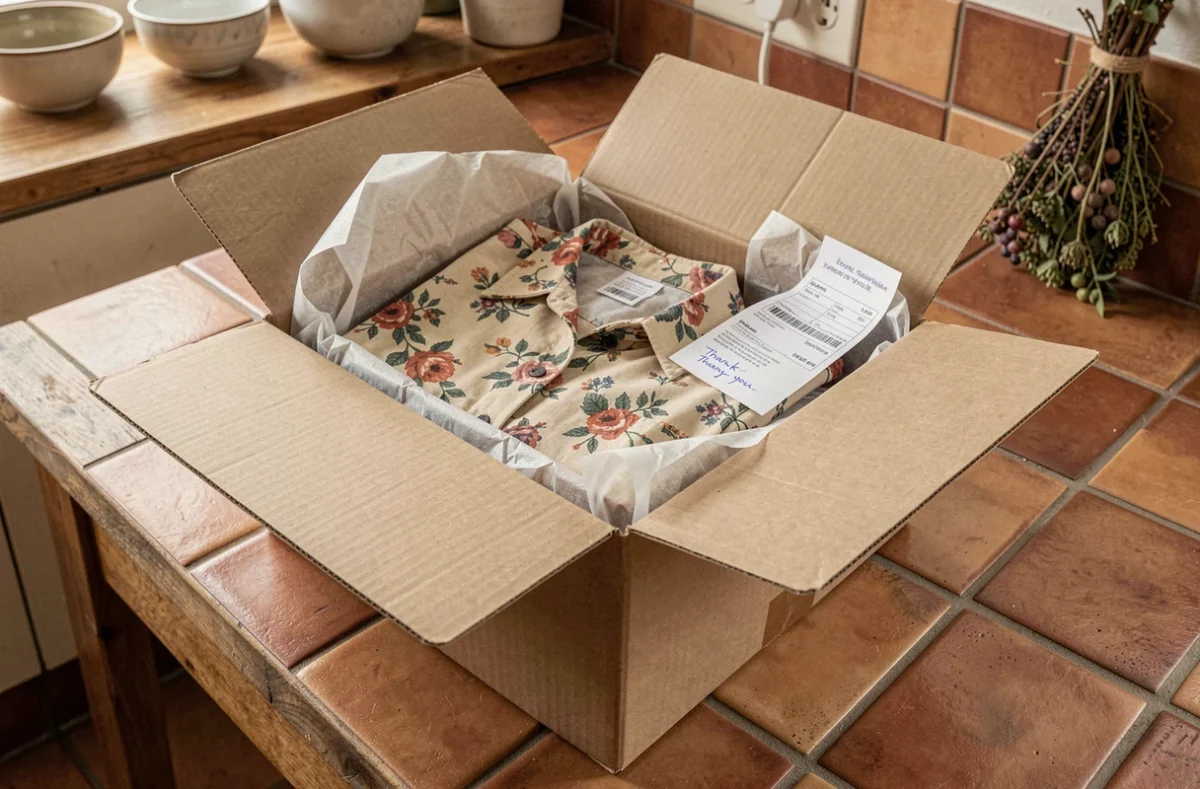
Second-hand product safety: the European framework since December 2024
The European General Product Safety Regulation, applicable since December 13, 2024, adds a layer of protection specifically for online marketplaces. These platforms must now designate a point of contact for authorities and consumers and establish internal procedures for handling safety concerns.
For second-hand items, this framework matters for more than just counterfeits. A vintage garment dyed with substances that are now banned, or a children’s accessory that no longer meets current standards, falls under this regulation. Marketplaces are required to remove these products when notified.
Buyers can report a product they believe to be dangerous directly through the platform, which must handle the report. This mechanism is not widely known, even though it provides an additional way to address disputes over an item’s physical condition.
Telling a genuine bargain from a bad deal when shopping at an online thrift store comes down to one simple habit: calculate the total cost before buying and check the seller’s status before paying. The listed price is never the final price, and the protections available depend entirely on the nature of the transaction.