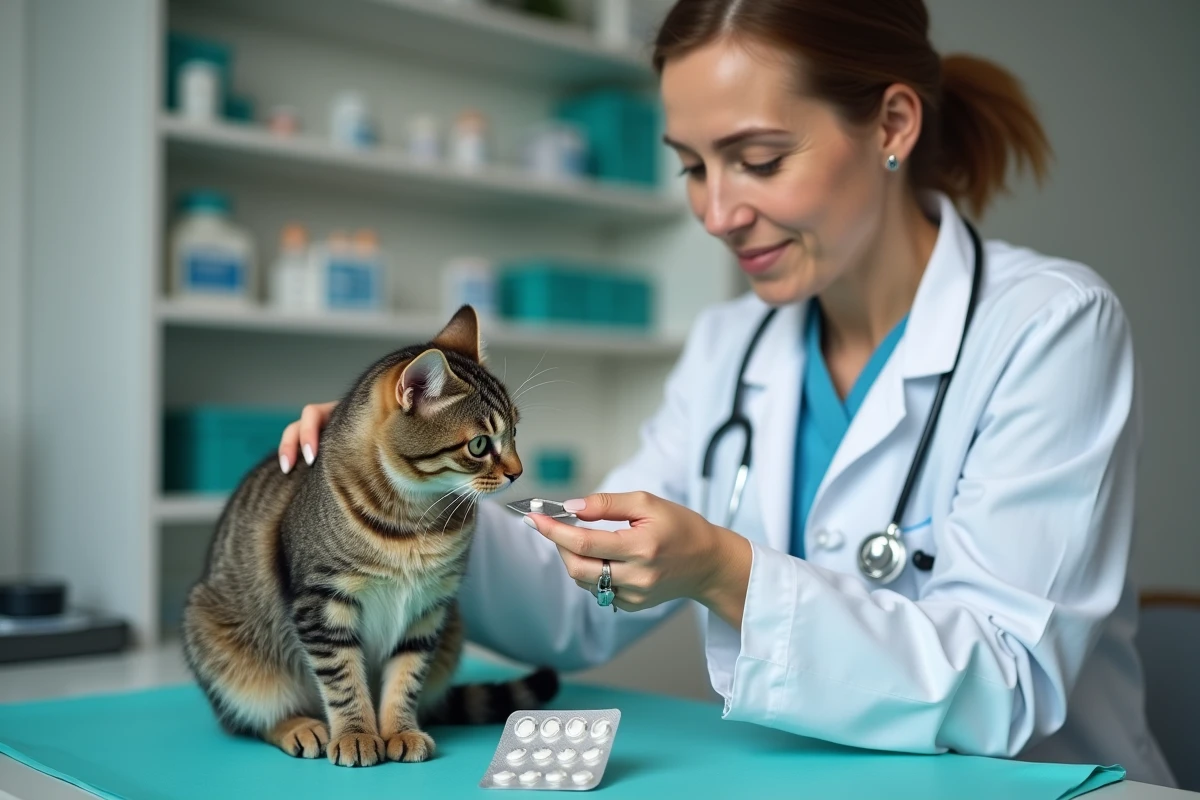
The contraceptive pill for cats is among the most frequent queries from owners of unspayed female cats. Between the promise of easy online purchasing and the regulatory reality, the gap widens. This guide compares the options available in 2026, their actual costs, and the legal constraints surrounding each method.
Contraceptive pill for cats and legal framework: what the regulations really allow
The contraceptive pill for cats contains a synthetic progestin (such as medroxyprogesterone acetate, the active ingredient in Mégépil). This type of veterinary medication remains available only by veterinary prescription in France. Websites offering purchase without a prescription circumvent this requirement, exposing buyers to uncontrolled or improperly dosed products.
Several forums continue to promote the “pill without a prescription,” but in practice, legal online access is tightening. Authorized online pharmacies now require a digitized prescription before shipping.
For owners wishing to buy a contraceptive pill for cats without a prescription, the most reliable approach remains to consult a veterinarian, even via teleconsultation, to obtain a valid prescription before placing any order.
Comparison of feline contraception: pill, injection, implant, and sterilization
The choice of a contraceptive method for a female cat depends on the budget, desired duration, and the animal’s health profile. The table below summarizes the available data for each option.
| Method | Administration Frequency | Prescription Required | Reversibility | Hormonal Risks |
|---|---|---|---|---|
| Pill (oral progestin) | 1 tablet every 15 days (outside heat) or 1/day for 5 days (during heat) | Yes | Yes | High in the long term |
| Hormonal injection | Every 3 to 6 months depending on protocol | Yes (veterinary act) | Yes | High in the long term |
| Hormonal implant | Single placement, variable duration | Yes (veterinary act) | Yes (removal) | Moderate to high |
| Surgical sterilization | Single procedure | Yes (veterinary act) | No | None (elimination of risk) |
The pill and injection are based on the same principle: blocking the hormonal cycle by administering progestins. The difference lies in the method of administration and the regularity required from the owner.
Practical constraints of the pill for female cats
Administering a tablet every fifteen days to a reluctant cat for years represents an underestimated commitment. A single missed dose is enough to restart a heat cycle, with the risk of an unintended pregnancy.
The pill is also contraindicated during pregnancy. It can be given eight days after the birth of kittens for a nursing cat, but this protocol requires rigorous veterinary follow-up.
Long-term risks of hormonal contraception in cats
Hormonal methods (pill, injection, implant) share a common risk profile related to prolonged exposure to synthetic progestins. Documented pathologies by veterinarians include:
- Mammary tumors, the frequency of which increases with the duration of use of oral or injectable progestins
- Uterine infections (pyometra), a surgical emergency that can jeopardize the cat’s life
- Diabetes mellitus, favored by metabolic disruption linked to synthetic hormones
Sterilization eliminates these hormonal risks as it removes the source of ovarian hormone production. This point is widely accepted among the veterinary profession.

Why shelters refuse the pill for adopted cats
Animal protection associations and shelters mandate systematic sterilization in their adoption protocols. This practice has strengthened with the widespread adoption of the TNR (Trap-Neuter-Return) method to manage stray cat populations. The pill goes against the practices of field professionals, who consider it unsuitable for the sustainable management of feline overpopulation.
Actual cost of the pill for cats versus sterilization in 2026
The economic argument in favor of the pill weakens when considering multiple years. The cumulative cost of veterinary consultations to obtain prescriptions, added to the price of tablets renewed throughout the animal’s life, often exceeds that of a single sterilization.
Several sterilization aid programs now exist for low-income households (municipal aids, association programs, pet insurance prevention packages). In 2026, cat insurance increasingly reimburses sterilization through their prevention packages, while the contraceptive pill is increasingly explicitly excluded from contracts, considered a convenience choice with an increased risk of hormone-dependent pathologies.
This asymmetry reinforces the economic interest of sterilization in the medium term. For a hesitant owner, the financial comparison clearly favors surgical intervention from the second or third year onward.
Criteria for making an informed decision
- If the cat is intended for breeding in the short term, the pill or injection offers reversible contraception under veterinary control
- If no litters are planned, sterilization remains the safest method, the least costly in the long term, and the best covered by insurance
- If the initial budget hinders the decision, check eligibility for sterilization aids offered by local municipalities or associations
The contraceptive pill is not a sustainable substitute for sterilization. It retains temporary utility, under the supervision of a veterinarian, for breeding cats between litters. For all other cases, the health and economic data of 2026 point towards surgery.