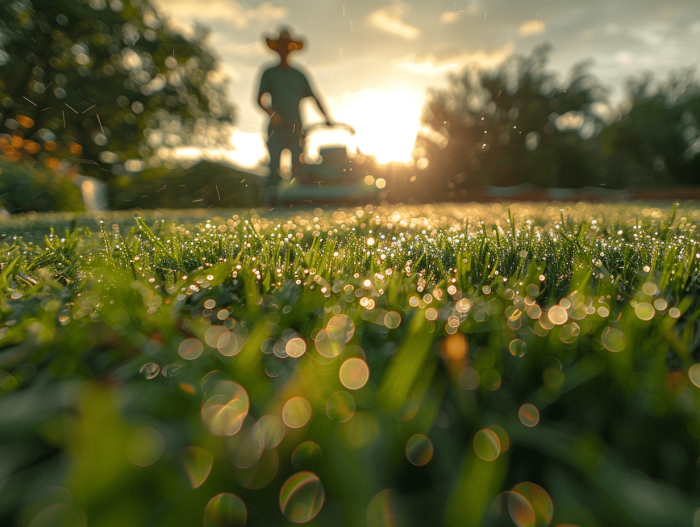
During the rainy seasons, taking care of your lawn is particularly important. Excessive moisture can lead to problems such as the proliferation of fungal diseases and chaotic grass growth. To avoid these inconveniences, consider adopting suitable practices.
First, it is recommended to mow regularly, but without cutting too short to avoid weakening the roots. Ensuring effective soil drainage helps prevent water stagnation. The use of preventive fungicide treatments may be necessary to protect the lawn from infections.
Best practices for maintaining your lawn in wet season
Mowing and drainage
- The first rule to follow: avoid mowing wet grass with an electric mower. Wait until the grass is dry; otherwise, you risk damaging not only your mower but also your lawn.
- Prefer a slightly higher cutting height to avoid weakening the roots. Good drainage is also fundamental. Ensure that water does not stagnate by using appropriate tools like scarification to renew and aerate the soil.
Fertilization and topdressing
- To strengthen your lawn, adopt fertilization practices. Adding nutrients to the soil promotes healthy grass growth. Topdressing, the action of applying organic matter to the lawn, enriches and improves soil structure. These techniques are particularly effective in spring and autumn.
Watering and disease prevention
- Although the wet season often limits watering needs, be sure to monitor soil moisture closely. Ensure that your lawn is neither too dry nor too waterlogged. Excess water can lead to fungal diseases. Use preventive fungicide treatments to protect your grass.
Scarification and aeration
- Scarifying your lawn helps remove dead parts, thus promoting renewed growth. Aeration of the soil is equally fundamental: it facilitates the infiltration of water, air, and nutrients. During wet periods, these practices ensure the health and beauty of your lawn.
Common mistakes to avoid to preserve your lawn’s health
Not mowing too short
- Mowing your lawn too short significantly weakens the roots. Grass that is too short cannot compete with weeds and becomes more susceptible to diseases. Prefer a reasonable cutting height to allow your lawn to regenerate effectively.
Avoiding overwatering
- Excessive moisture is the main cause of many lawn problems, including the formation of moss and the development of fungal diseases. Water moderately and prefer the morning and evening hours to avoid rapid evaporation. Good water management is essential for maintaining a healthy lawn.
Ignoring weeding
- Weeding is an essential action to reduce the presence of weeds and moss. In the wet season, these unwanted plants proliferate quickly. Do not wait for your lawn to be overrun: intervene at the first signs to preserve the quality of your grass.
Omitting scarification and aeration
- Failing to practice scarification and aeration is a common mistake. These methods help renew the lawn and facilitate the infiltration of water, air, and nutrients. Without these actions, the soil becomes compacted and asphyxiated, compromising grass growth.
Precautions for Effectively Maintaining Your Lawn in Wet Season