
A 205/55 R16 91V tire and a 205/55 R16 94V tire share the same dimensions and speed rating, but not the same load capacity. The difference between these two ratings may seem small on paper. However, it has direct consequences on safety, vehicle behavior when loaded, and compliance with technical inspections.
Load capacity 91V vs 94V: compared data
The load index is the number that precedes the letter on the sidewall of the tire. It corresponds to a maximum weight per tire, defined by a standardized table. The letter V indicates a maximum allowed speed of 240 km/h, which is the same in both cases.
| Criterion | Tire 91V | Tire 94V |
|---|---|---|
| Maximum load per tire | 615 kg | 670 kg |
| Total load on 4 tires | 2,460 kg | 2,680 kg |
| Speed index | V (240 km/h) | V (240 km/h) |
| Reinforced construction (XL) | No (standard) | Possible, to be verified |
The difference of 55 kg per tire represents an additional 220 kg of load capacity for the entire vehicle. For a compact sedan or a city car, this difference seems marginal. For a family station wagon loaded with four passengers and luggage, it changes the game.
Before choosing between tire 91V or 94V, you should first check the label affixed to the driver’s door frame or the manufacturer’s manual. The minimum approved index for your vehicle is listed there.
Tire load index and approval: what the regulations say
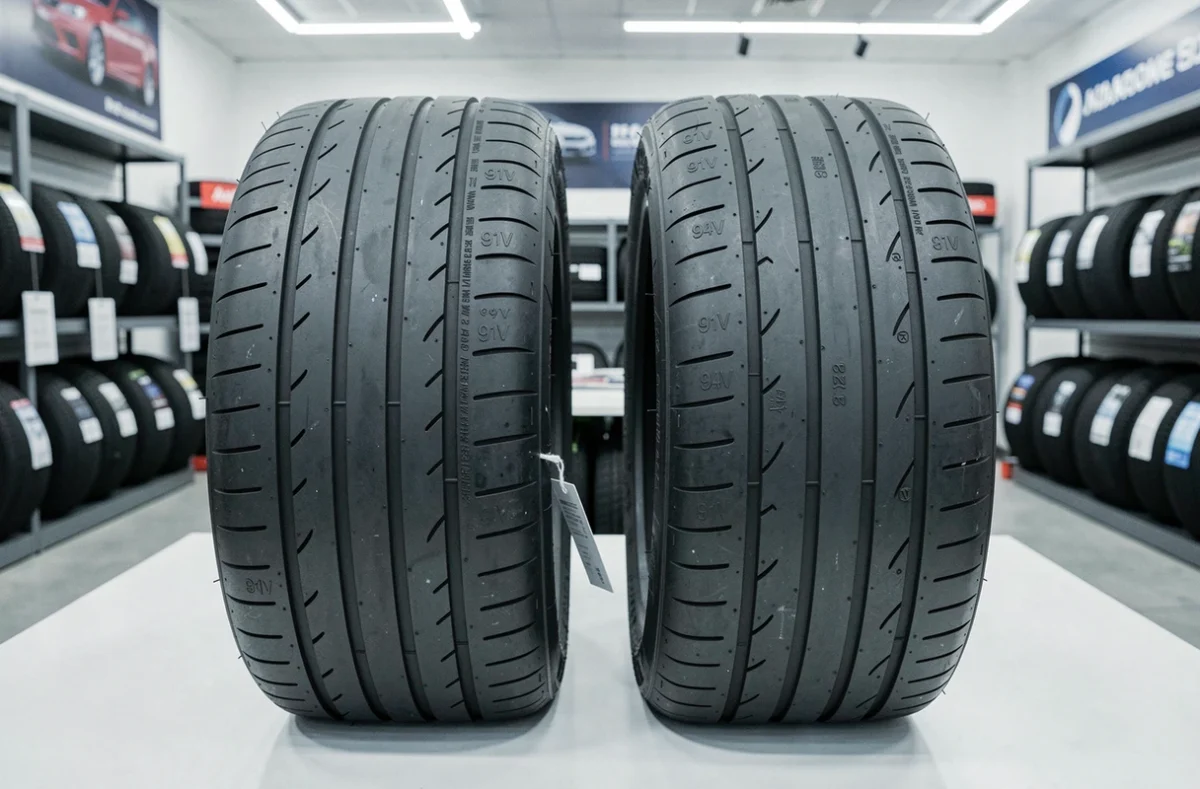
The load index is not a comfort choice. It is a certification data related to the vehicle. Fitting a tire with an index lower than that recommended by the manufacturer constitutes a non-compliance issue, detectable during technical inspections.
Specifically, if your registration document or manual mentions a minimum index of 94, a 91V tire does not comply with the approval. The reverse is not a problem: fitting a 94V tire on a vehicle approved for 91V is allowed and poses no technical risk.
- Check the minimum load index on the door label, the manufacturer’s manual, or the registration documents.
- A higher index than recommended is always acceptable. A lower index is never acceptable.
- In case of doubt, the original marking on the tire fitted as original equipment (factory-fitted) serves as reference.
An undersized tire in load can hold the owner liable in case of an accident. For professional use or in fleets, this liability is even clearer, as the operator must ensure the suitability of the tires for the total loaded weight of the vehicle.
Tire 94V and XL marking: not always identical construction
A load index of 94 can correspond to either a standard construction tire or a tire marked Extra Load (XL). Both display the same capacity of 670 kg per tire, but the construction differs.
An XL tire has reinforced sidewalls and operates at a higher inflation pressure to reach its nominal load. In contrast, a non-XL 94V tire, in a different size, can achieve this capacity with a standard structure.
Confusion is common: seeing “94V” is not enough to conclude that the tire is reinforced. You need to look for the XL or “Extra Load” marking on the sidewall. This distinction impacts the recommended inflation pressure. An under-inflated XL tire does not deliver its nominal load capacity, which negates the whole point of the higher index.
European tire label: comparing beyond the load index
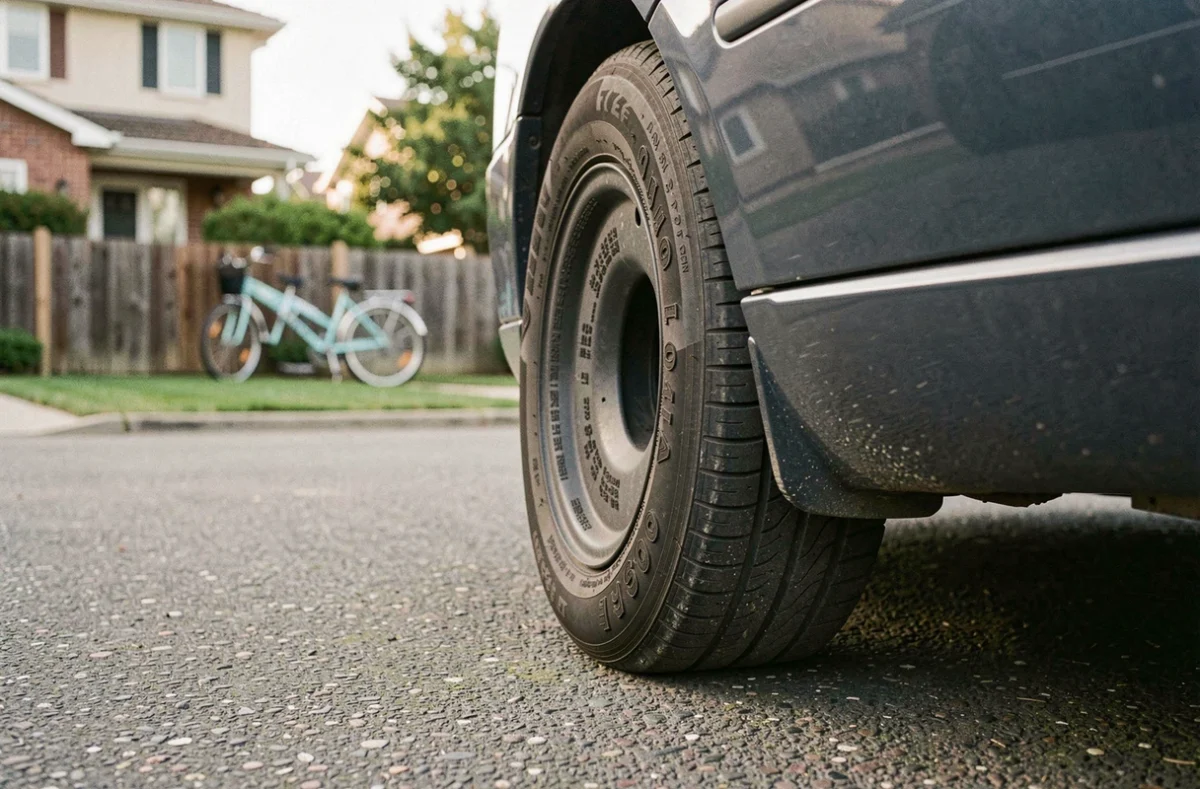
Two tires with the same index 94V can offer very different performances based on three criteria standardized by the European label: energy efficiency, wet grip, and rolling noise.
A 94V tire rated A in wet braking and another rated C in the same category will not behave the same way in the rain, despite having the same load index. The load index guarantees weight handling, not the overall performance of the tire.
- The European label rates energy efficiency from A to E, which directly influences fuel consumption.
- Wet grip, rated from A to E, measures the braking distance on wet roads.
- External rolling noise is expressed in decibels and impacts acoustic comfort in the cabin.
Comparing only the 91V and 94V indices is like looking at just one line of a table. The European label completes the diagnosis by adding real performance criteria on the road.
What load index for what use: sedan, station wagon, or utility vehicle
For a city car or a compact sedan primarily used solo or as a couple, a 91V index is sufficient in most cases, provided it matches the manufacturer’s recommendation. The load margin is generally sufficient for daily use.
The situation changes with a station wagon, a minivan, or a vehicle often loaded to capacity. Four adults, luggage, and possibly a trailer put much more demand on the tires. A 94V index then offers a measurable additional safety margin on each wheel.
For vehicles used in a professional context (delivery, tradespeople, fleets), the load index becomes a criterion of responsibility. The price difference between a 91V and a 94V remains modest compared to the cost of an incident related to an undersized tire.
The choice between 91V and 94V boils down to a verification and a calculation. The verification is the minimum approved index for your vehicle. The calculation is the difference between the actual loaded weight and the total capacity of the four tires. If the margin is low with a 91V, the 94V is necessary. If it is comfortable, the 91V fulfills its role without unnecessary extra cost.