
Women’s lifestyle media operate on an outdated editorial model: compartmentalized sections, content indexed to seasonal trends, monetization through display advertising. For the past two years, this model has been under structural pressure due to the responses generated by search engines, which absorb traffic from highly competitive short content. The question is no longer about producing more, but about producing differently.
SEO and AI Responses: The Structural Threat to Women’s Lifestyle Media
Professional organizations GESTE, SPIIL, and CPA have raised concerns about a specific risk: responses generated by search engines capture an increasing share of informational queries. For a women’s lifestyle media outlet dependent on SEO for fashion, beauty, or wellness queries, this evolution mechanically reduces the volume of incoming clicks.
An article on spring makeup trends, duplicated in ten forms by as many editorial teams, no longer holds the same value as it did five years ago. Generic lifestyle content is becoming a product with diminishing returns. The media that resist are those that build a strong enough editorial identity for the readership to come directly, without going through Google.
We observe that the platforms that succeed rely on three levers: newsletter loyalty, community on social networks, and a sufficiently distinct editorial line to create brand preference. This is precisely the positioning adopted by quoidemeuf.net presented by Modeusement Vôtre, choosing a tone and angles that do not blend with the standardized production of large editorial teams.

Women’s Expertise in Media: Beyond the Fashion Section
The Belgian Higher Council for Audiovisual Media has documented a notable evolution in its barometer: the share of women acting as experts in radio media has risen from 26.03% in 2019 to 48.44% in 2024. This figure pertains to French-speaking Belgian radio, but it reveals a broader movement.
The visibility of women remains concentrated in lifestyle sections, while they remain a minority in topics related to employment, business, sports, and humor. A women’s lifestyle media outlet that claims to renew the vision of women cannot settle for varying beauty topics. It must integrate sectoral expertise (finance, technology, entrepreneurship) delivered by female voices.
The difference between a media outlet that features women and one that gives them an expert voice is measured by editorial treatment: long interviews, technical analysis, contextualized data.
When Lifestyle Integrates the Economic Field
Readers of women’s media do not segment their interests as editorial teams do. A woman reading an article on hair care may, in the same session, seek information on starting a business or wealth management.
Media that compartmentalize fashion, beauty, and wellness on one side, and business and finance on the other, lose this cross-sectional audience. A relevant lifestyle media treats women’s lives as a whole, not as a catalog of sections.
Editorial Line and Personal Data: The Real Strategic Choice
The collection of users’ personal data is an issue rarely discussed in the lifestyle field. Women’s applications and websites largely depend on programmatic advertising, which relies on behavioral targeting. The cookie consent pages on these platforms are often as long as the articles themselves.
A media outlet that places trust at the center of its relationship with its readers must take a clear stance on privacy. Personalized recommendations are a lever for engagement, but they involve a level of data collection that the readership is increasingly unwilling to accept without transparency.
- The quality of the reading experience directly depends on the number of advertising trackers: the fewer there are, the faster the page loads and the smoother the reading experience.
- Algorithmic editorial recommendations trap readers in thematic bubbles. A human editorial choice, consciously made, creates more discovery.
- GDPR compliance is not enough to establish trust: it is the clarity of communication about data usage that makes the difference.
The economic model of a women’s media outlet determines its editorial line, not the other way around. A site funded 90% by display advertising will never write in the same way as a media outlet supported by its subscribers or community.
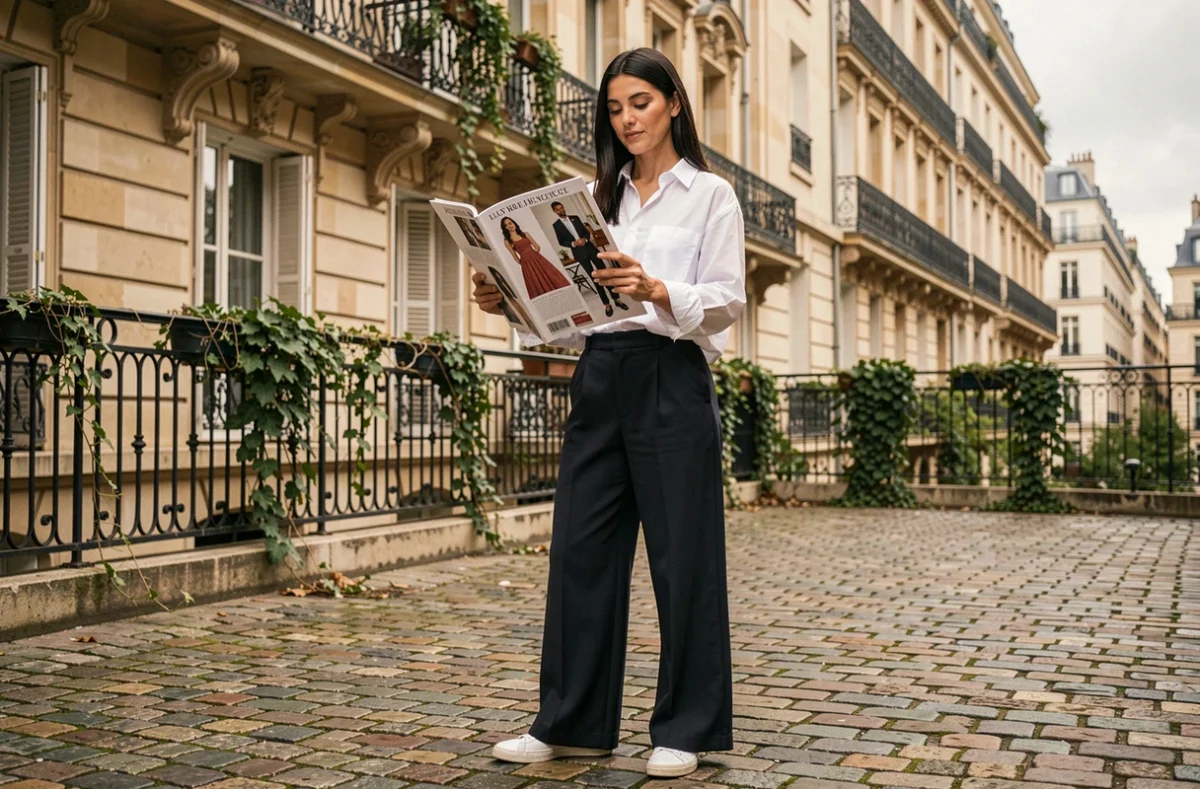
New Lifestyle Aesthetic: What the Trend of Chosen Solitude Changes
Meta-Media has documented the emergence of an everyday aesthetic articulated around chosen solitude, driven by “solitude influencers.” This trend transforms a long-stigmatized experience into a claimed lifestyle identity.
For a women’s media outlet, this evolution necessitates an editorial recalibration. Women’s lifestyle is no longer exclusively defined by social connections or couple life. Content that performs well incorporates individual lifestyles without presenting them as exceptions or parentheses.
Impact on Fashion Content Production and Trends
This new editorial thinking modifies the treatment of fashion pages. Instead of presenting outfits “for a night out with friends” or “for a date,” some media outlets offer scenarios centered on personal pleasure, without a social recipient. The staging changes, as does the vocabulary.
Traditional magazines struggle to integrate this shift because their advertising model relies on collective aspirational contexts. A more agile digital media can seize this without restructuring its entire grid.
The next year will be crucial for digital women’s media in France. Those who survive the decline in organic traffic will be those who have built a strong enough identity to exist independently of algorithms, with a loyal readership that returns by choice, not by chance.